
Mind & Habits · Self-Development · English · 100 pages
The Resilience Equation
What Actually Sustains Effort When Talent and Motivation Run Out
by Alexia Le
Why do some people keep going for years while others with more talent quietly quit? Not a bigger tank of willpower: five supports that work together.
- ✓ Secure checkout by Stripe · card, Apple Pay and more
- ✓ Instant download: PDF + EPUB, any device
- ✓ File problem? Full refund within 7 days (policy)
About the book
The usual answers are "want it more," "find your passion," or "be grittier." Each treats sustained effort as one quantity you either have or don't.
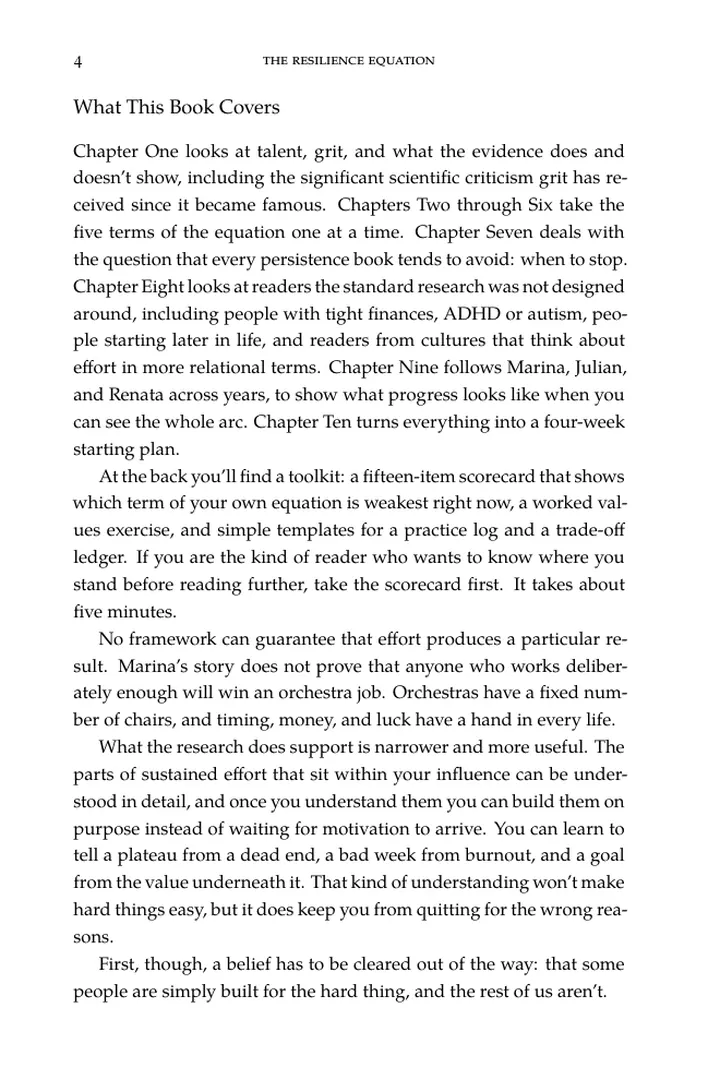
The research tells a more useful story. People who keep going run on five supports: Direction × Structure × Interpretation × Support × Capacity. When one drops close to zero, extra effort elsewhere rarely makes up the difference, which tells you exactly where to look instead.
What's inside
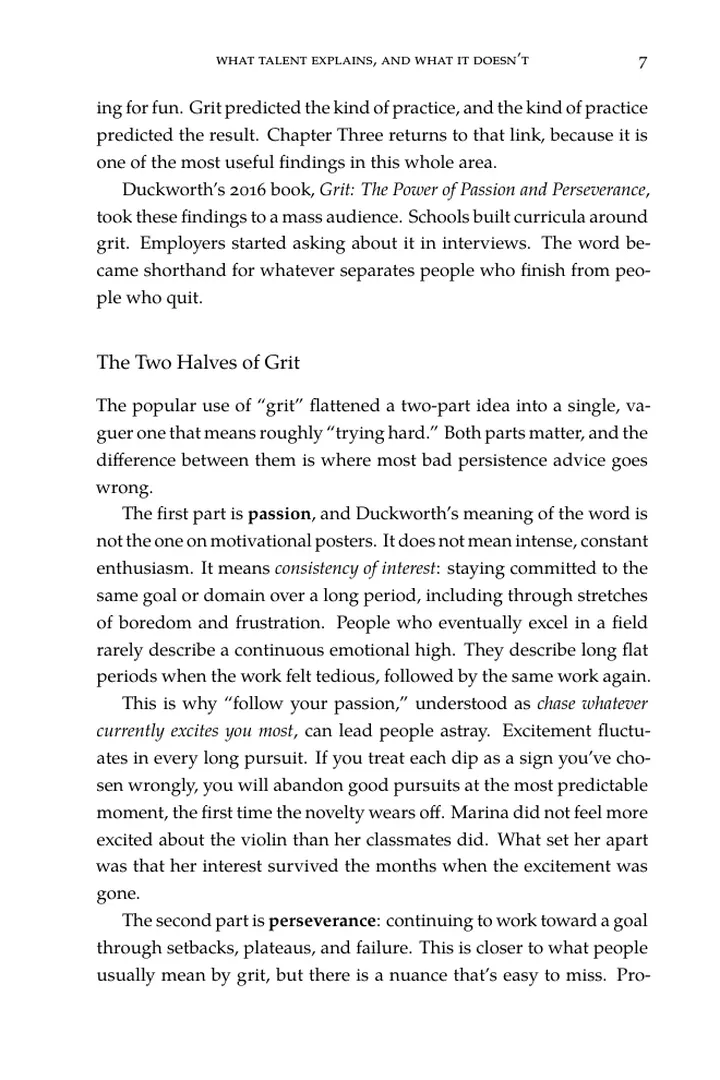
- What the famous grit research found, and where later studies challenged it
- How to practice so that hours turn into skill
- How to read a setback as information instead of a verdict
- How to tell an ordinary plateau from burnout
- A 15-item scorecard and a four-week starting plan
Contents
- A Note on the People in This Book
- Introduction: The Question Talent Can’t Answer
- Chapter One: What Talent Explains, and What It Doesn’t
- Chapter Two: Direction: What the Effort Is For
- Chapter Three: Structure: How Practice Turns Into Skill
- Chapter Four: Interpretation: The Story You Tell After a Setback
- Chapter Five: Support: The Room You Practice In
- Chapter Six: Capacity: Rest, the Body, and the Price of Effort
- Chapter Seven: Keep Going or Let Go
- Chapter Eight: When the Standard Map Doesn’t Fit
- Chapter Nine: What Change Looks Like Over Time
- Chapter Ten: Starting Tomorrow Morning
- Conclusion: The Equation, Revisited
- The Toolkit
Read a little first
Marina was, by any early measure, the least promising violinist in her conservatory class. She learned new pieces slowly. Her intonation drifted when she was nervous, which in the first year was most of the time. Her early juries drew the kind of comments teachers write when they are trying to be kind: solid fundamentals, continue developing expression. Two of her classmates had been performing concertos with youth orchestras since they were twelve. Everyone, including Marina, assumed she was the one who would quietly drift into another career.
A look at the pages
From the free sample.