Fire · Burnout & Recovery
How to Recover from Burnout
For people who still have to show up on Monday.
You meet every deadline. Your reviews are good. And still, nothing about work makes you feel much anymore.
The weekends stop restoring anything. Sunday afternoon brings a dread you cannot quite name. You are not falling apart. You are just tired in a way sleep does not fix.
If that sounds familiar, you are in the right room. This page is a quiet place to start — and a way to keep going, one small step at a time.
The book that walks it with you
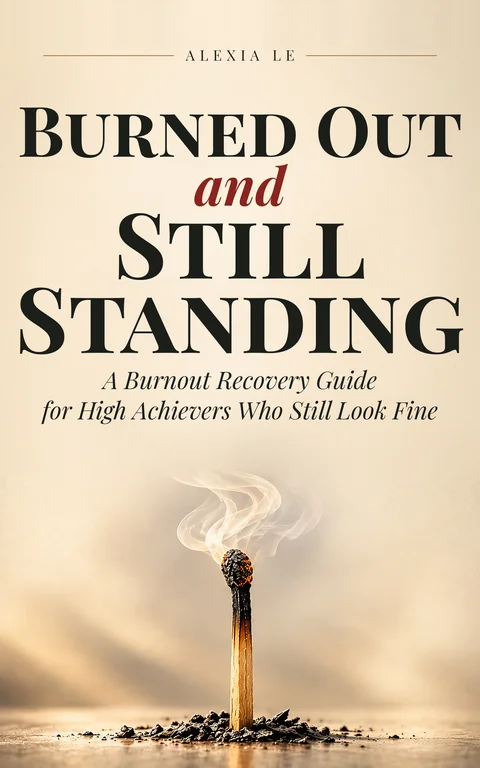
Burned Out and Still Standing
A Burnout Recovery Guide for High Achievers Who Still Look Fine
You meet every deadline and your reviews are good, yet nothing about work makes you feel much anymore. A step-by-step recovery guide for people who still have to show up on Monday.
- ✓ Secure checkout by Stripe · card, Apple Pay and more
- ✓ Instant download: PDF + EPUB, any device
- ✓ File problem? Full refund within 7 days (policy)
PDF + EPUB, instant download · Read the first chapters free
What burnout feels like when you still look fine
High-functioning burnout hides behind competence. You keep delivering, so nobody worries. Least of all you.
Some days the ground feels thin. Sleep comes late. Nothing dramatic — just a tiredness that stays.
The signs are often quiet: the email you cannot answer, the meeting you dread for no clear reason, the evening that passes without you really being in it. None of them look like a crisis. Together, they are the whole story.
Burnout or depression? Three quiet questions
The book opens with three questions. They do not diagnose anything — only a professional can do that — but they help you see which room you are standing in.
One asks what restores you, and what does not. One asks what the tiredness is made of. One asks what you would need to hear to ask for help.
If the answers point toward something heavier than tiredness, the book says so plainly: see someone now. There is a list of signs for that, and no shame attached to any of them.
Recovery has an order
The book works in a deliberate order. The body first. Then the thoughts that will not clock out. Then the question of who you are apart from your job. And only after that, the decisions about work.
A long vacation rarely fixes it, because rest alone was never the missing piece. What helps is smaller, and closer: a two-week reset for the body that fits around a full-time job, small children, or shift work. Scripts for boundaries at work. Words for telling your partner and your kids what is going on. A personal warning card, and a 48-hour plan for catching a relapse early.
Not sure where you stand?
There is a short check on this site — a few quiet minutes, no account, no email. It will not label you. It only shows you what the tiredness might be made of. Take the burnout check.
Questions people ask first
How long does burnout recovery take?
There is no fixed timeline. For many people it is measured in months, not days — and it rarely moves in a straight line. What matters more than speed is direction: small, steady steps that hold even on a hard week.
Can I recover from burnout without quitting my job?
Yes — that is who this book was written for. It is for readers who are still working, and for readers on leave. Quitting is one option among several, and the book holds it until the end, after the body and the thoughts have had their turn.
Is burnout the same as depression?
No, though they can look alike from the outside, and they can travel together. The book opens with three questions that help you tell them apart — and it is plain about the signs that mean you should see a professional now.
Why doesn’t a vacation fix burnout?
A vacation rests you. Burnout is not only tiredness — it is also the thoughts that will not clock out, and the question of who you are apart from your job. Rest helps, but it cannot answer those by itself.
What helps first when I’m burned out?
The body. Sleep, food, movement — small and steady, in that order. The book starts there for a reason: nothing else holds until the body has something to stand on.
When should I see a doctor?
If the tiredness comes with hopelessness that will not lift, or with thoughts of harming yourself, or with physical symptoms that worry you — see someone now, not later. This page and the book are companions, not a substitute for care.
Keep going, one small step at a time
You do not need a new life. You need a way back to the one you already have — in an order that holds. The book is 111 pages, and it starts with the body.
About the book · PDF + EPUB, instant download · First chapters free
This page is a companion, not medical advice. If you are struggling, please reach out to a doctor or a mental-health professional — especially if the tiredness comes with hopelessness that will not lift.