High-Functioning Burnout: Signs You Are Burned Out While Still Looking Fine
By Alexia Le · November 16, 2026
You meet every deadline. Your reviews are good. Nobody is worried about you, least of all you. And yet nothing about work makes you feel much anymore, the weekends stop restoring anything, and the dread starts on Sunday afternoon.
Some people call this high-functioning burnout: burnout that hides behind competence.
How the World Health Organization describes burnout
The WHO includes burnout in its International Classification of Diseases (ICD-11) as an occupational phenomenon, not as a medical condition. It defines burnout as "a syndrome conceptualized as resulting from chronic workplace stress that has not been successfully managed," with three dimensions:
- feelings of energy depletion or exhaustion
- increased mental distance from one's job, or feelings of negativism or cynicism related to one's job
- reduced professional efficacy
The WHO also notes that the term refers specifically to work, and should not be used for experiences in other areas of life.
Why it is easy to miss when you are still performing
Notice that only one of those three dimensions is about output. You can be exhausted and cynical and still deliver, for a long time, especially if you are used to pushing through. Because the work keeps getting done, the warning signs get explained away: a busy quarter, a bad month, I just need a vacation.
Some quieter signs to take seriously:
- Rest no longer works. A weekend or even a week off barely helps.
- You feel detached from work you used to care about.
- Small tasks take a disproportionate amount of effort to start.
- You are irritable at home in a way that surprises you.
- Sunday afternoon has become the worst part of the week.
Burnout or something else?
Burnout and depression can overlap, and they are not the same thing. If low mood, hopelessness or loss of interest follow you outside of work as well, or if you are having thoughts of harming yourself, please talk to a doctor or a mental health professional soon. In the US you can call or text 988 to reach the Suicide and Crisis Lifeline at any time.
First steps that fit around a full-time job
- Start with the body. Sleep, food and movement are not a reward for finishing your work; they are what lets you do it.
- Shrink the to-do list for two weeks. Decide what can be done at "good enough," postponed, or handed back.
- Say it out loud to one person. Burnout thrives on looking fine.
- Know your options. In the US, the Family and Medical Leave Act gives eligible employees up to 12 workweeks of unpaid, job-protected leave in a 12-month period, including for their own serious health condition. Eligibility depends on your employer's size, how long you have worked there and your hours, so check the Department of Labor's fact sheet or ask HR.
Going further
My book Burned Out and Still Standing is a step-by-step recovery guide for people who still have to show up on Monday. It works in a deliberate order: the body first, then the thoughts that won't clock out, then the question of who you are apart from your job, and only after that the decisions about work. Inside are three questions for telling burnout from depression, a two-week body reset that fits around a full-time job, small children or shift work, plain-English basics on FMLA leave and workplace accommodations, scripts for boundaries at work and at home, and a 48-hour plan for catching a relapse early.
This article is general information, not medical or legal advice.
Keep reading
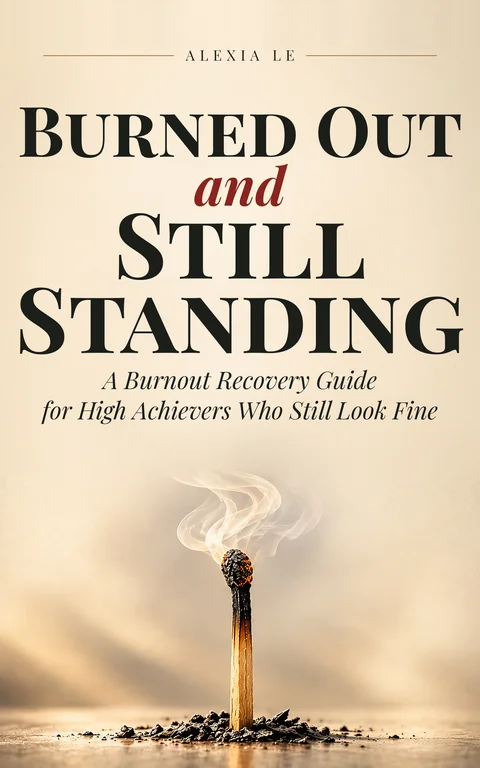
Burned Out and Still Standing
A Burnout Recovery Guide for High Achievers Who Still Look Fine
You meet every deadline and your reviews are good, yet nothing about work makes you feel much anymore. A step-by-step recovery guide for people who still have to show up on Monday.